 © Elise240SX · CC BY-SA 4.0
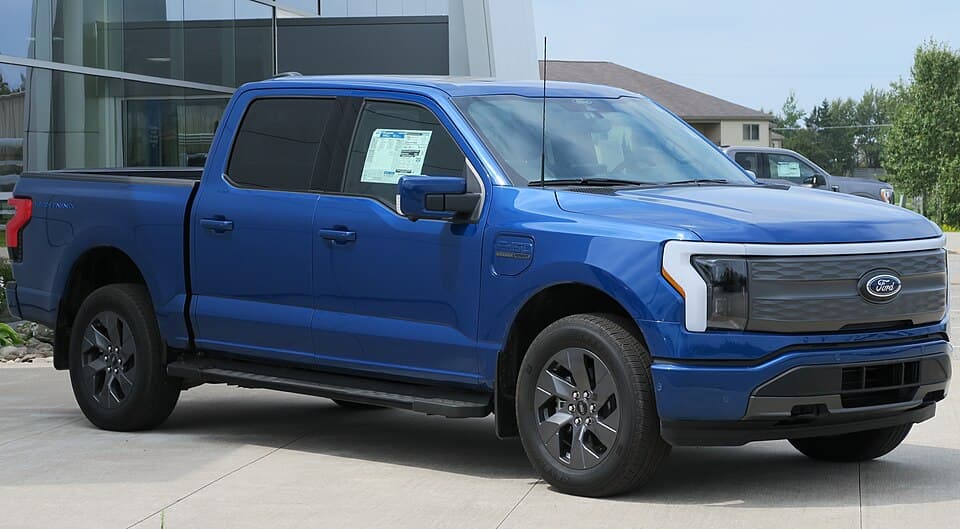
Ford F-150 Lightning
from $55,000320 mi range · tows 10,000 lbs
The familiar F-150, electric. Powers your house in a blackout.
West Virginia EV guide
West Virginia has no state EV purchase credit and a coal-mining economy that makes EV politics genuinely complicated. The state is mountainous, charging-thin outside the metros, and has lower EV adoption than almost any state east of the Mississippi. Charleston, Morgantown, Huntington, and the I-79/I-77 corridor between them work for EV ownership. Rural WV honestly doesn't, yet.
With the federal $7,500 EV credit ended Sept 30, 2025, manufacturer cash discounts of $7,500–$10,000 are the main lever. Appalachian Power (AEP) covers most of the state; Mon Power (FirstEnergy) covers north-central WV. Neither offers headline EV rates yet.
The federal $7,500 EV credit ended Sept 30, 2025 — but these incentives are still live in 2026.
No major state-level EV purchase credit on file. Check your local utility for charger rebates ($200–$1,500 in many areas).
Most OEMs are offering cash on the hood to replace the lost federal credit. Varies by brand, model, and month.
30% of install cost up to $1,000 for personal use. Install before June 30, 2026.
Worth roughly $300–$600/year at typical loan rates and tax brackets.
Programs change. Verify state credits at the DOE state incentive database and federal status at irs.gov.
Picked for West Virginia's climate, terrain, and the cars you'll actually see on dealer lots.
© Elise240SX · CC BY-SA 4.0The familiar F-150, electric. Powers your house in a blackout.
 © Vauxford · CC BY-SA 4.0
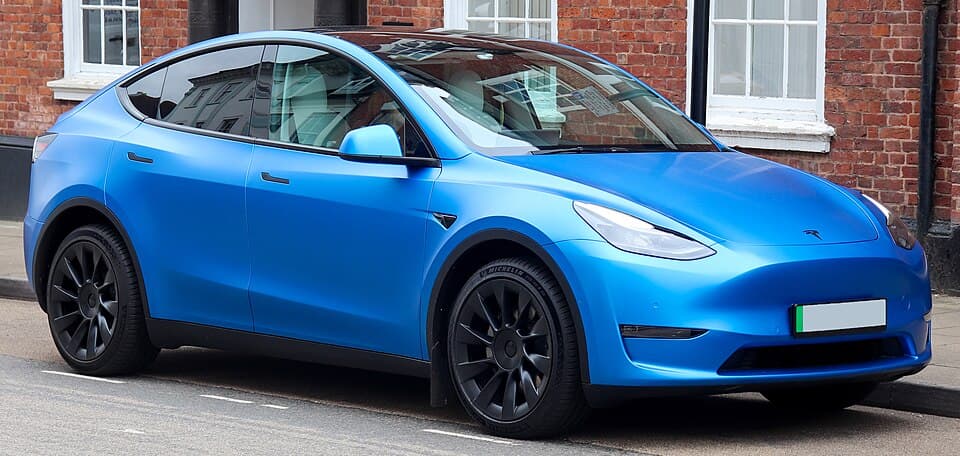
America's best-selling EV. Cargo space + Supercharger access.
 © © M 93 · CC BY-SA 3.0 de
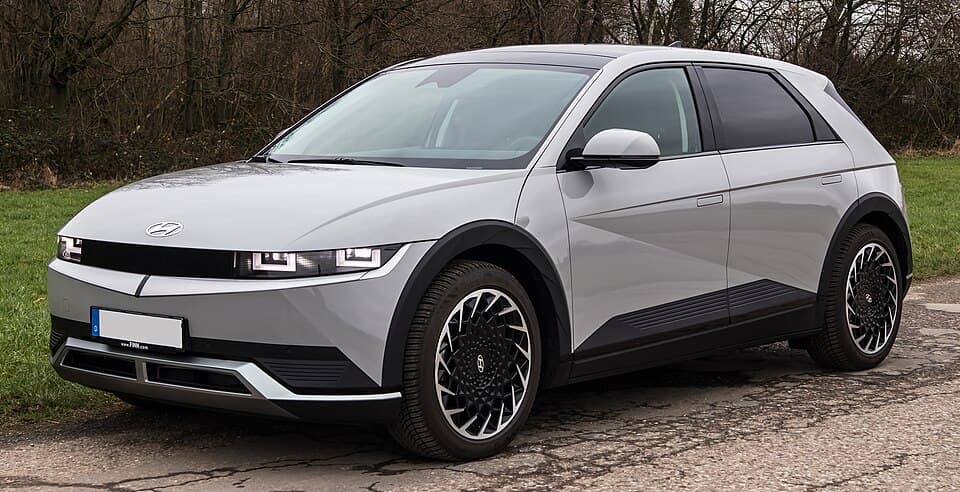
Retro-futurist styling, 18-minute fast charging.
 © Kevauto · CC BY-SA 4.0
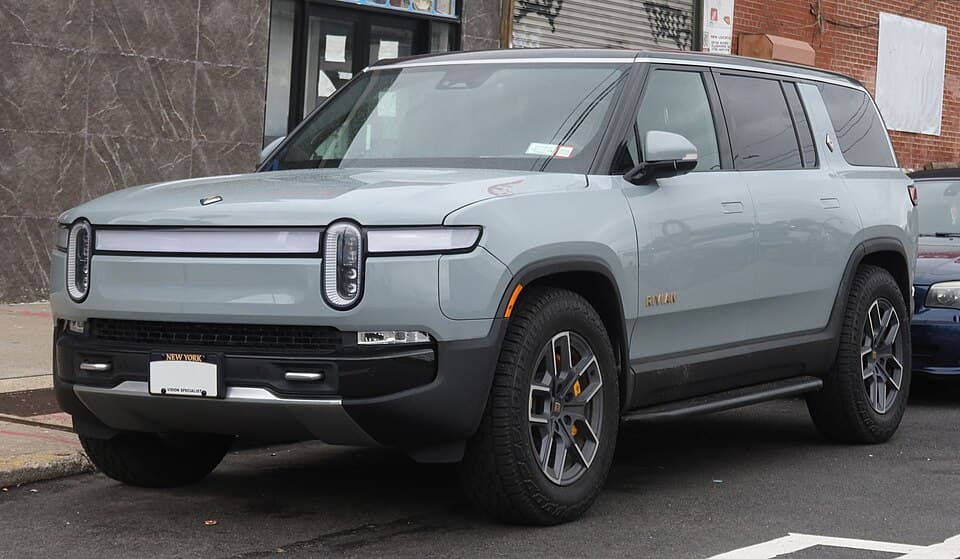
Three-row family SUV that can also climb a mountain.
West Virginia climate varies sharply by elevation. The Ohio Valley (Huntington, Parkersburg, Wheeling) sees mild winters with limited sustained cold. The Allegheny highlands (Davis, Snowshoe, Canaan Valley) get genuine mountain winters with heavy snow and sustained sub-freezing weather. Charleston and Morgantown sit between, with regular cold but rarely the extremes of the high country.
Expect 15–22% range loss in the river valleys on the coldest weeks; 22–30% in the high country. Heat-pump-equipped EVs (Tesla, Hyundai/Kia, newer Mach-Es) handle WV cold meaningfully better. AWD is essential for anyone living above 2,500 ft elevation and strongly recommended even in the valleys for winter road conditions.
The mountain efficiency factor: WV's relentless elevation changes eat range going up and recover most of it via regen coming down. Plan charging around climbs, not totals. The drive from Charleston up to Snowshoe, or from Morgantown out to Davis and Blackwater Falls, is genuinely range-demanding.
I-77 north-south (Charleston to Beckley to Princeton and into Virginia) and I-79 north-south (Charleston to Morgantown to Pennsylvania) both have improving Tesla Supercharger and Electrify America coverage. I-64 east-west across the southern part of the state is workable. I-68 from Morgantown east into Maryland has solid coverage thanks to commuter and university-town demand.
Off the interstates, charging is genuinely thin. The southern coalfields (Logan, Williamson, McDowell County), the eastern panhandle outside Martinsburg, and the central highlands all have real gaps. PlugShare planning is mandatory for trips deep into rural WV.
The Morgantown angle: WVU's research and tech footprint has driven above-average EV adoption in north- central WV. Morgantown has the best per-capita charging density in the state, helped by university-driven sustainability commitments.
The coal-country truck paradox: the Ford F-150 Lightning gets honest looks from WV coal-country truck buyers who'd otherwise default to a gas F-150. Bidirectional power export is genuinely useful in mountain winter storms that routinely take out the grid for days. A Lightning with home backup integration can power a typical WV house for two to three days on a full battery. The politics are awkward; the math is real.
Honest WV verdict: if you live in Charleston, Morgantown, Huntington, or along the I-79 / I-77 corridor with a home charger, an EV genuinely works. If you live in the southern coalfields, the eastern panhandle hills, or the central highlands without consistent grid service, a hybrid is still the more honest choice for now.
The quiz factors in your driving, charging, budget, and your state's current incentives.
Take the quiz →